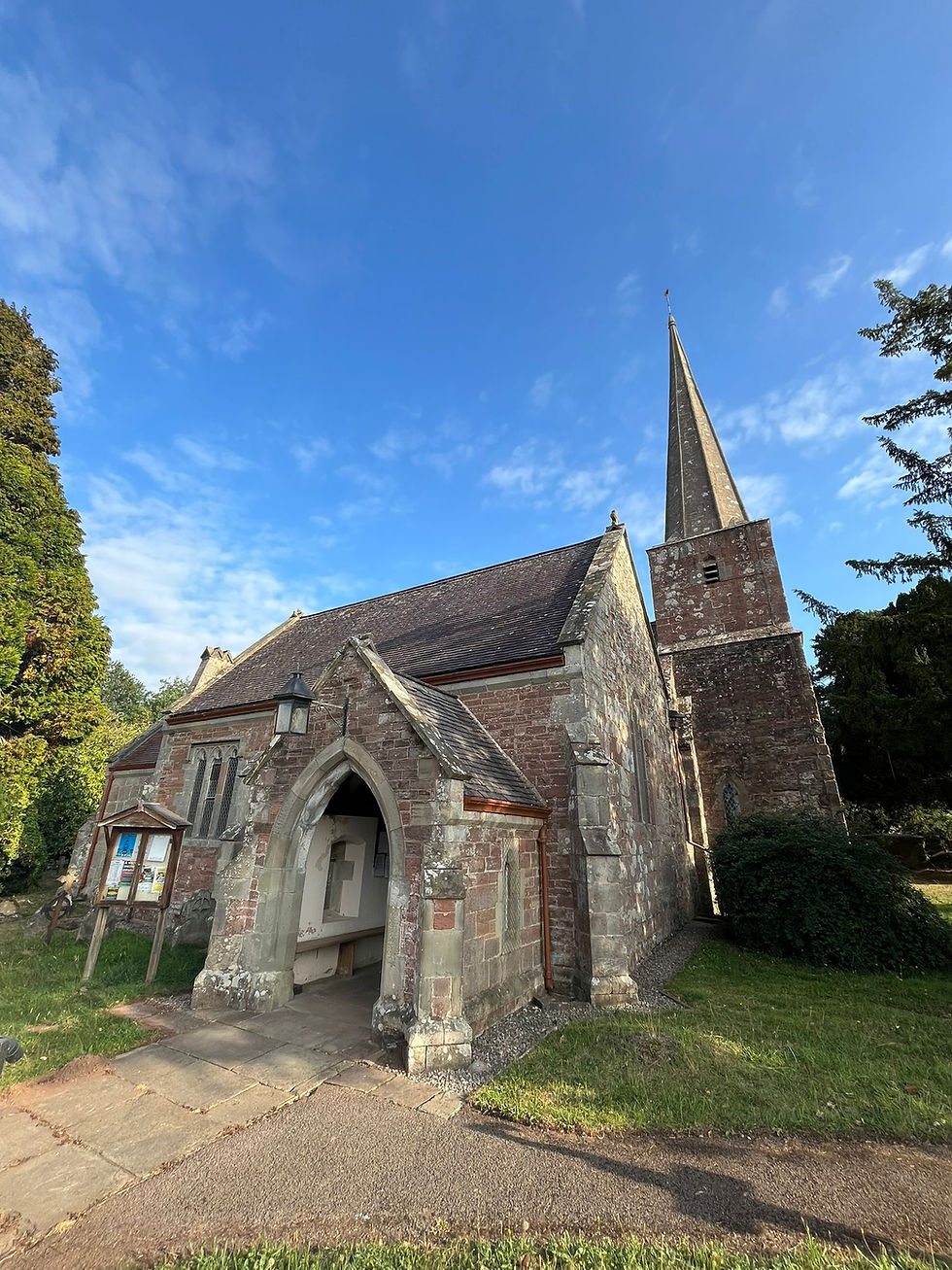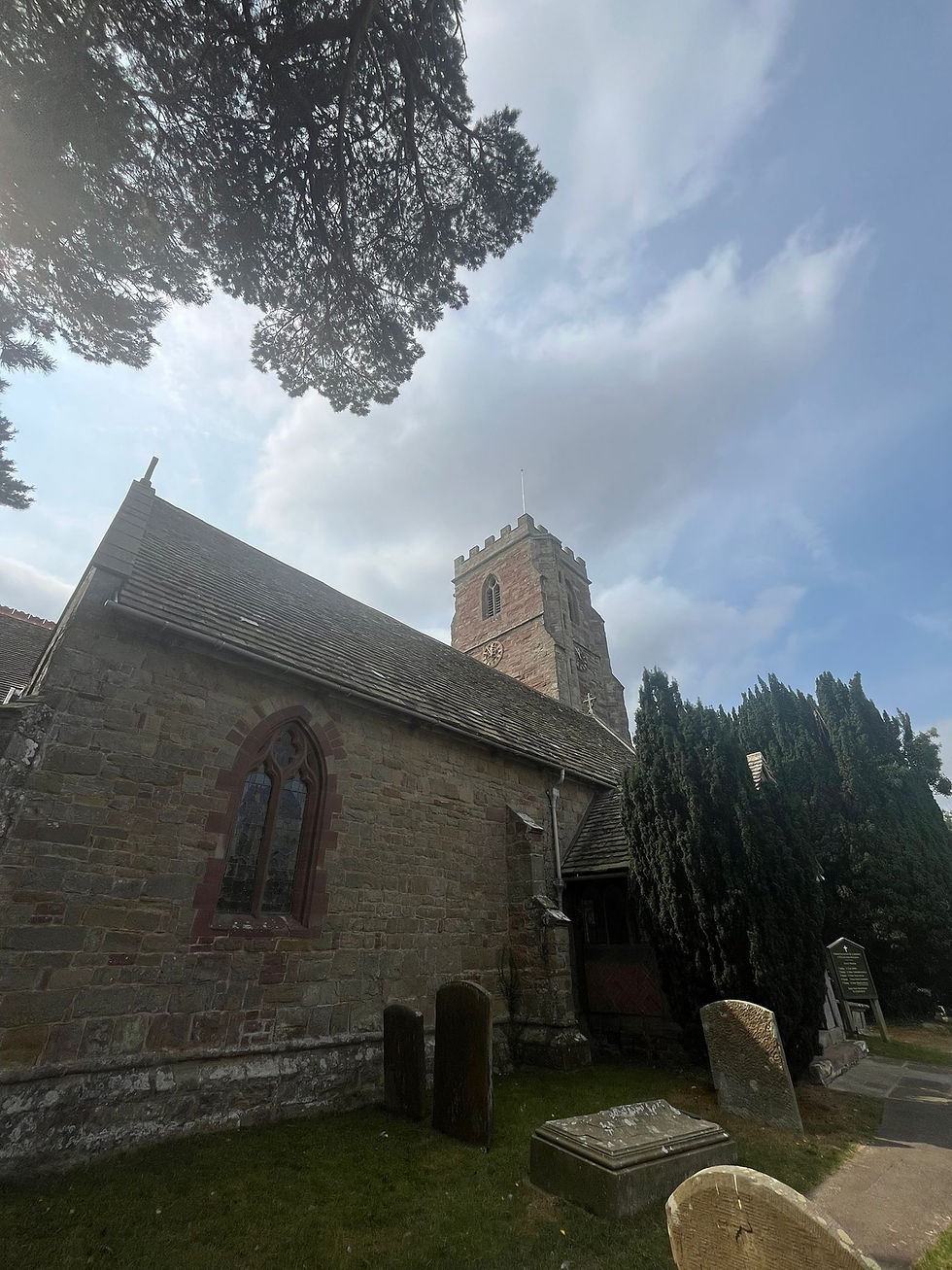
St Lawrence, Weston-under-Penyard
The main body of the church dates from the 12th century, but this may have been built over the site of an earlier Saxon church - carvings of figures above the south door possibly date from this period.
The church sits at the top of the village, its tower being visible from miles around. Standing in the porch offers a stunning view to the south-west, across the rolling hills.
There is a good selection of stained glass inside the church, including a piece which was commissioned for the millennium. Another interesting example is that of the figures of Paul and Dorcas, which bear the likeness of Edward Burdett Hawkshaw, Rector from 1854-1912, and his wife.
Also of note are the two fonts - the older, smaller one, and the more modern, larger one which stands beside the south door.
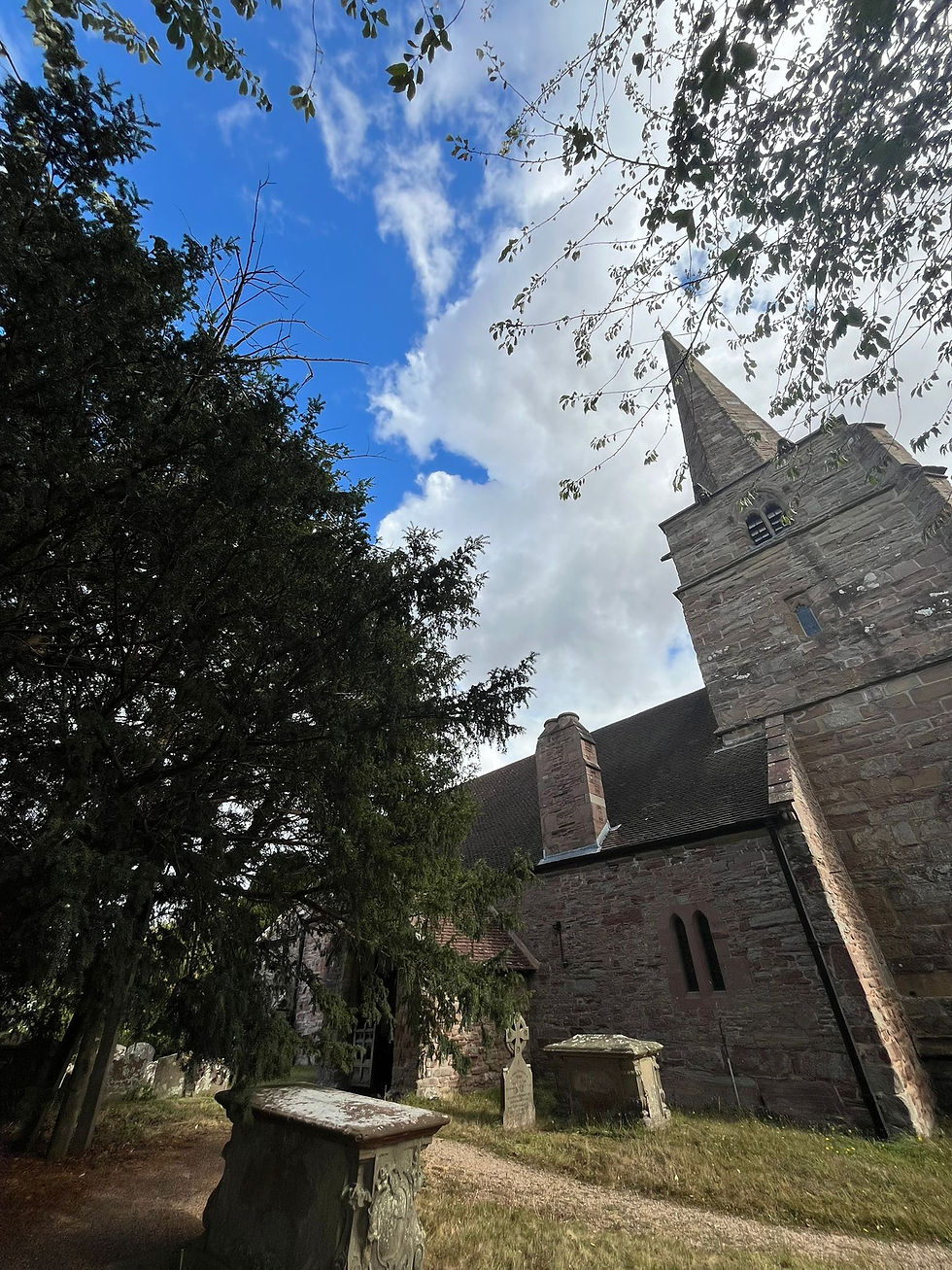
St Mary the Virgin, Linton
It is quite possible that St Mary's is the oldest church in the Benefice - many of the elements of its design and geography ( its hilltop positioning, the circular graveyard, and the ancient yew tree) point to the possibility that the church was built to replace an earlier pagan shrine.
The yew tree itself is certainly the pre-eminent feature of the churchyard - standing just opposite the south porch, it is of a great age, though (as with all ancient trees), it cannot be known for certain exactly how old it is. The botanist David Bellamy reportedly said that he thought it could be up to 4,000 years old - it is certainly amongst the oldest trees in the whole country. Disaster struck when, in 1998, the tree was deliberately set on fire, causing extensive damage which killed the central stem. However, the outer shell survived, and the tree continues to thrive.
The interior of the church is mostly a result of the work and support of Reverend Edward Palin (great-grandfather to Michael Palin), Rector of Linton from 1865 until his death in 1903. The painting of the Madonna and Child, which hangs in the north of the nave, was a gift from the now-dissolved Sisters of St Mary of Nazareth, which occupied the house called Priest Chambers (probably the medieval vicarage) from 1925-1950.


St John the Baptist, Aston Ingham
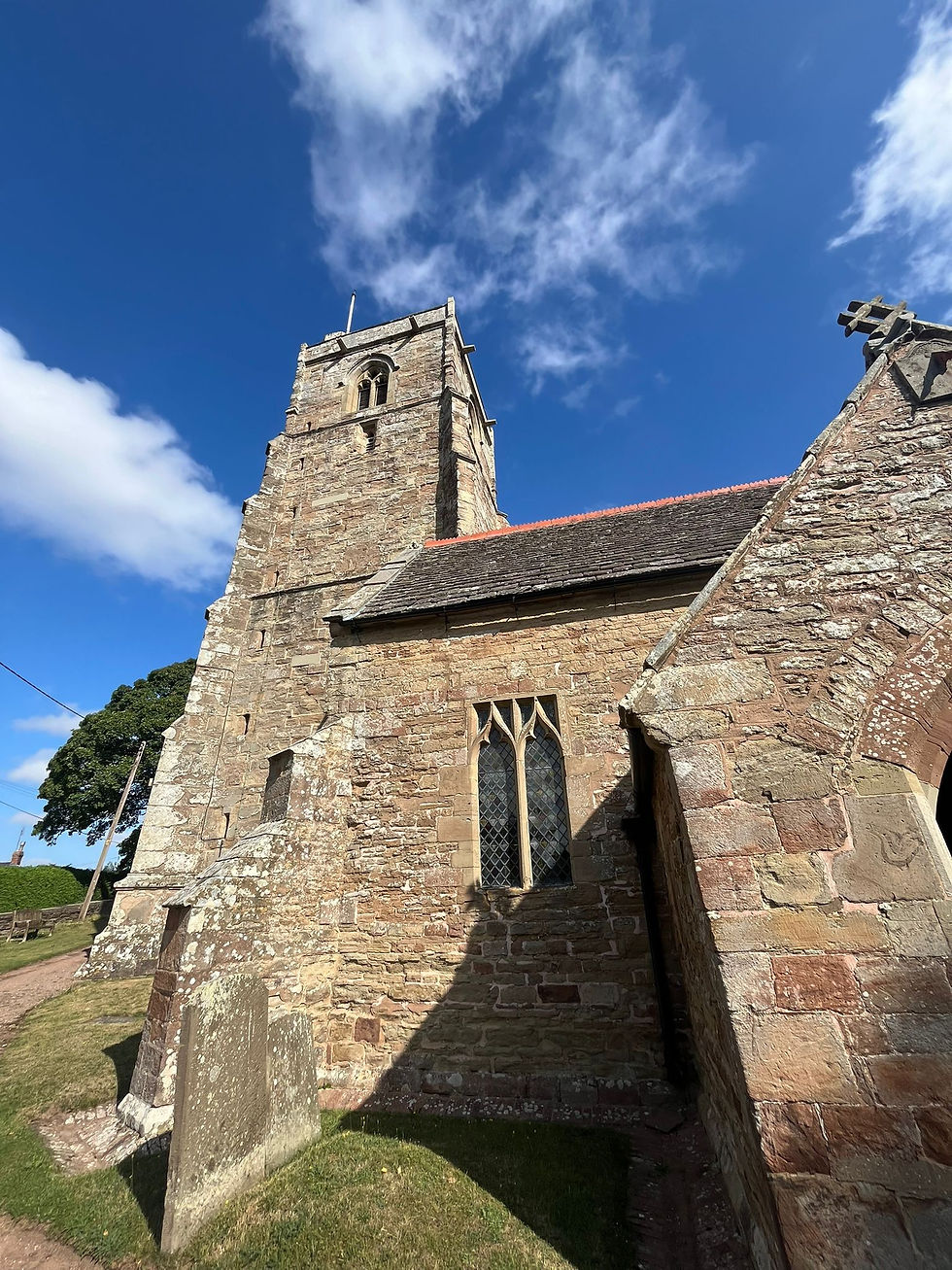
To study the history of St John's is to become familiar with a certain family name - that of 'Whatley' . Between 1785 and 1964, five generations of the Whatley family served as Rector in Aston Ingham, with fathers being followed by sons in a way more like royal succession than clerical appointment!
The church building itself was rebuilt in 1891 - the previous building had suffered from an increasingly-deteriorating condition, which necessitated complete rebuilding, though in a design which was sympathetic to the old church, and which managed to retain both the 13th century chancel arch and the 16th century porch.
Of particular note in the church is the font, which dates from 1689 - this is one of only 38 fully-lead fonts in the country. Furthermore, the stained glass in the east window, completed in 1923, is a striking example - at dusk, the last elements of the window to be lit by the evening sun are the star, Christ's halo, and the curve of His mother's dress.
St John the Baptist, Upton Bishop
St John the Baptist sits some distance away from the main village - this was a fairly common occurrence with medieval churches, because housing would have been far more dispersed. However, with subsequent settlements being grouped together, the result was a church which sits tucked away, a fair walk away from many of the parishioners.
One of the main draws of the church is the proudly-exhibited piece of Saxon stonework in a display case by the door, depicting a cleric or saint with their hand raised as they impart a blessing.
One famous past parishioner, Frances Ridley Havergal, is remembered for her hymn 'Take my Life, and Let it Be', which is still sung to this day. With the income that came from the hymn's success, she supported the church (her brother, Francis, was Rector in the 1880s), and the result was the construction of the charming vestry, which sits behind the organ, and contains some wonderfully-colourful stained glass.
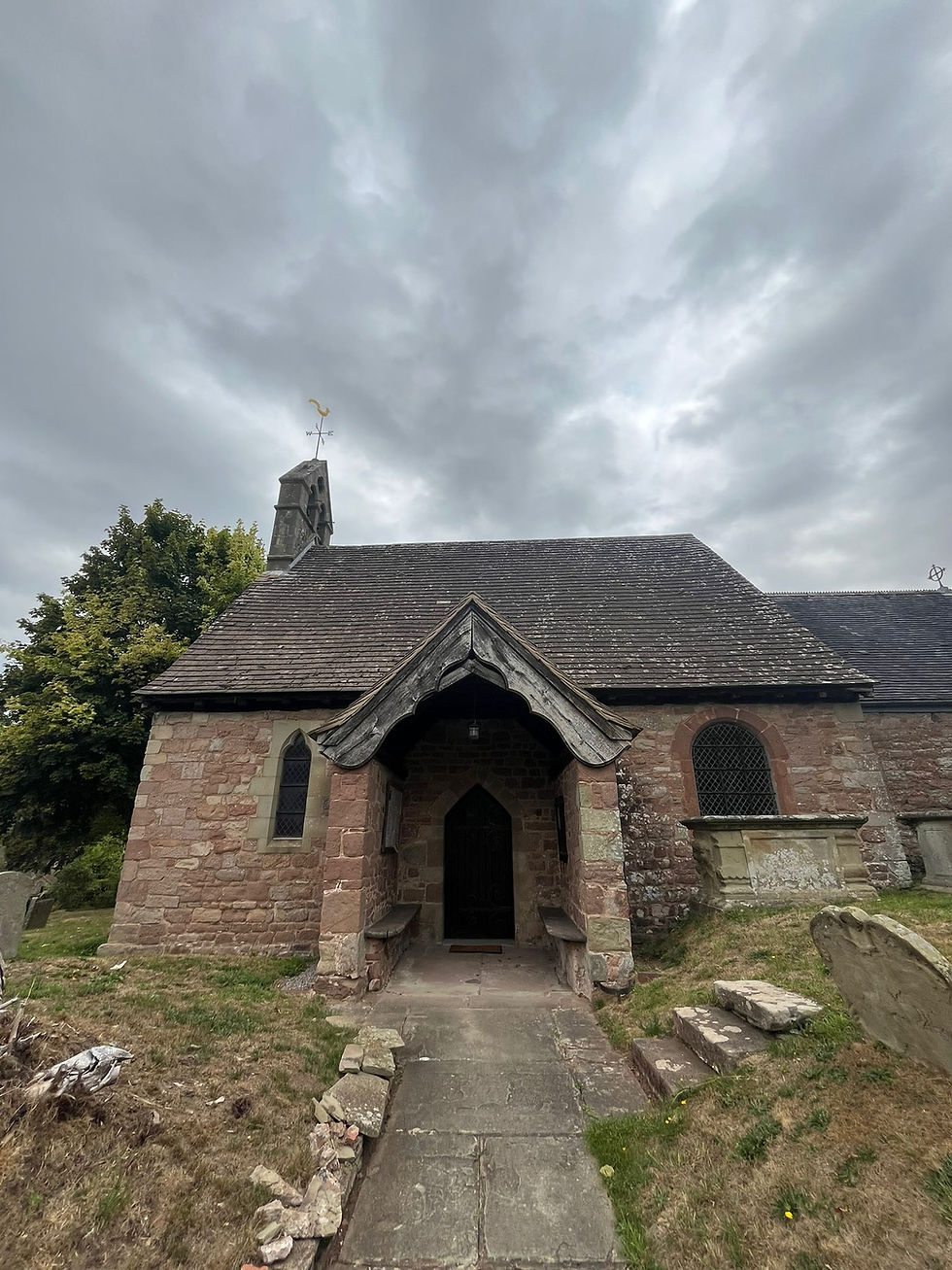
St Michael, Hope Mansell
As the name 'Hope' suggests, St Michael's sits within a picturesque small valley, its 13th century building tucked to the side of the road and surrounded by a small number of dwellings.
The internal layout of the church is interesting - mainly because it is off-kilter! This is likely the result of the nave being expanded, which would have been narrower than it is now, and was later extended by building out to the south.
Evidence of this can be seen in the peculiar small archway to the south side of the nave/chancel arch - it is far too small to have been the remnant of a staircase up to any rood screen that would have been there, and the fact that it is entirely within an internal wall rules out its use as an early window. Anyone who explores St Michael's and has an idea as to the mystery is very welcome to let us know what they think!
St John the Baptist, Lea
Lea parish was originally separated off from Linton in 1418, but never received much financial support from either the diocese or local patrons until the 19th century.
Prior to the creation of the parish, there was a small chapel in the village, which would have been used for usual Sunday services - however, all baptisms and funerals took place in the main parish church in Linton, which required parishioners to make the trip over what was then quite a dangerous flood plain. It was this that was the main catalyst for the creation of Lea as a parish in its own right, with the current church being built shortly afterwards in the middle of the 15th century.
Of particular note in the church is the extraordinary font, featuring a bejewelled elephant at its base, with a similar bowl upon it - although the bowl is not original to the base and stem, they both draw inspiration from Italian mosaic work.